The first time I’d planned to escape to Kuranda, I thought it’d be a swift half-day trip – just hop on the Skyrail, grab a coffee, maybe pick up a boomerang fridge magnet as a souvenir and be off. But I couldn’t have been more wrong. This little ‘village in the rainforest’ hanging out above Cairns has a secret talent for slowing you down – it sneaks up on you when you least expect it. The lush canopy overhead, the local markets, and that train line – it all combines to charm even the grumpiest of souls, so much so that time itself just sort of… drifts off to sleep while you’re sipping your flat white, surrounded by butterflies.
For someone like me, who’s put a lot of miles on the odometer through Tropical North Queensland, I can tell you that Kuranda is more than just a passing stop – it’s a proper full-on experience, wrapped up in misty rainforest and local stories.If your trip starts further south, check out our Australia tours from Sydney that lead you directly into the heart of the tropics.
Contents
A Quick Guide to This Tropical Village
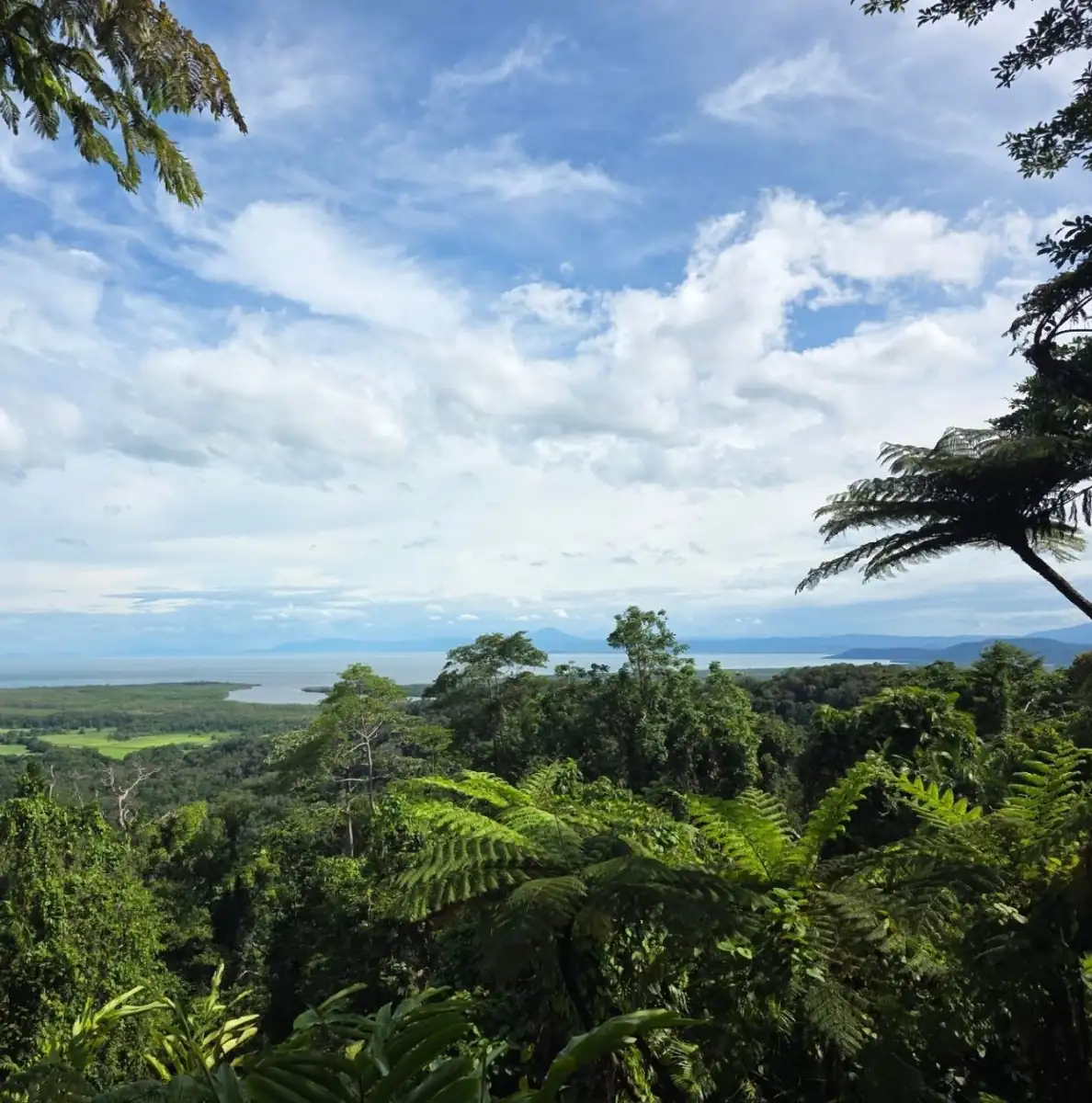
Sitting snugly in the heart of the Wet Tropics World Heritage rainforest, about 25 kilometres northwest of Cairns, Kuranda has a pretty sweet spot – all of 330 meters above sea level. That’s just enough altitude to make the air feel a bit cooler and cleaner than the coast. The village itself is pretty small, with only around 3,000 residents calling it home, but it still manages to draw in hundreds of thousands of visitors each year – mostly because it’s so handy to get to from Cairns, thanks to the Skyrail Rainforest Cableway and Kuranda Scenic Railway.
| Quick Facts About Kuranda | Details |
|---|---|
| Location | 25 km northwest of Cairns, QLD |
| Elevation | ~330 metres above sea level |
| Environment | World Heritage-listed tropical rainforest |
| Average Temperature | 25–30°C (wet); 18–25°C (dry) |
| Annual Rainfall | ~2,000 mm |
| Population | Approx. 3,000 residents |
| Best Time To Visit | May–October (dry season) |
It’s rainforest country through and through. You’ll hear whipbirds before you see them, and the Barron Falls Lookout is one of the most photographed views in Far North Queensland.
Tropical Village in the Hills
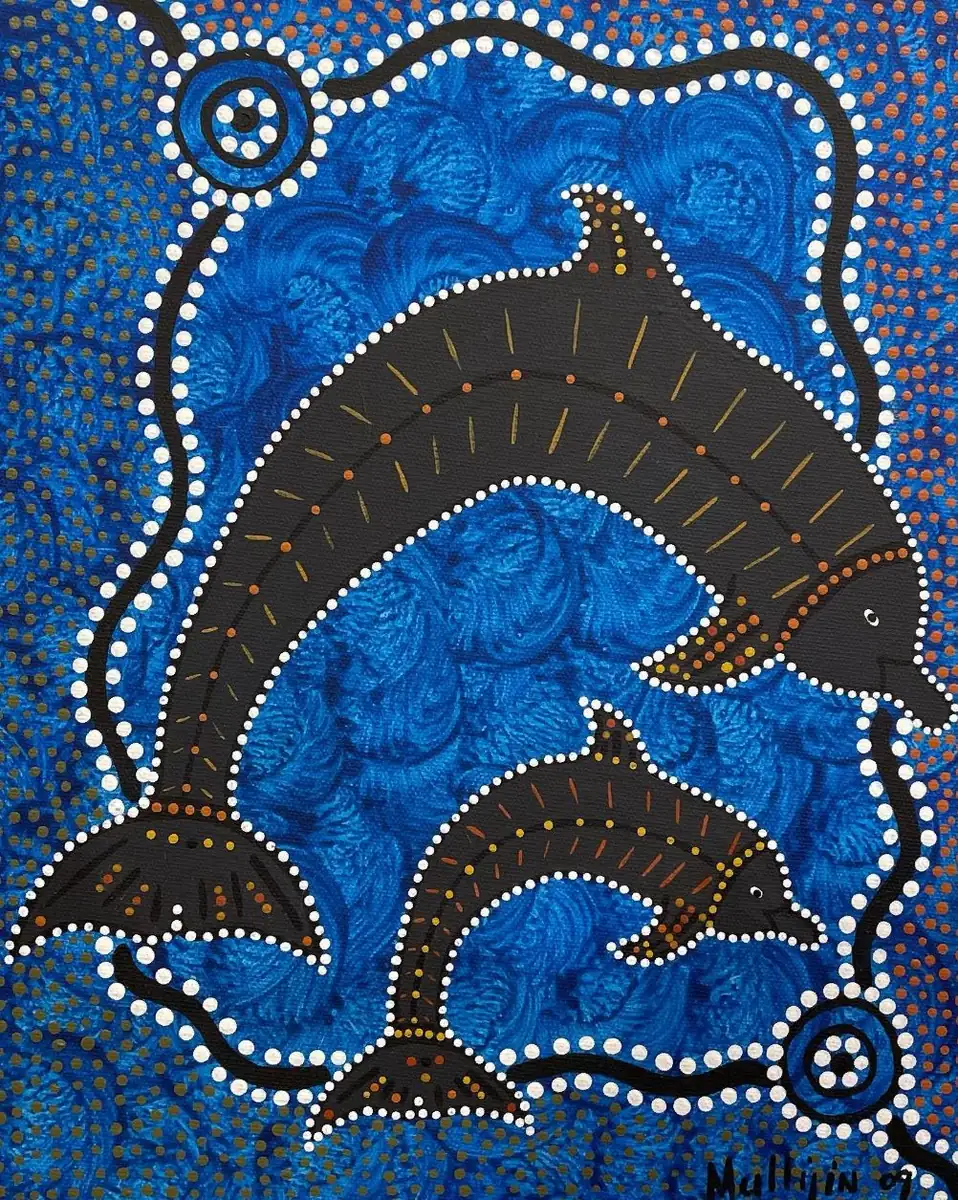
Kuranda may look small on a map, but it’s a living, breathing community of artists, growers and storytellers. Around Coondoo Street and Therwine Street, you’ll find Aboriginal art galleries, boutique shops and cafes under giant fig trees.
Pop into Doongal Aboriginal Art Gallery or the Rainforest Aboriginal Tribal Groups Studio, where Indigenous artworks from Eastern Kuku Yalanji and Djabugay artists tell the deep story of this rainforest Country. There’s also a thriving local art scene — handmade jewellery, wood carvings and colourful prints inspired by the Wet Tropics rainforest.
Kuranda’s charm lies in its still feeling personal. You’ll meet the artist, the beekeeper, the coffee roaster — often all in one morning stroll.
The Famous Markets
The Kuranda Original Rainforest Markets have been running since the late 1970s, long before social media made them famous. Under a natural canopy of palms, you’ll find local farmers, boutique producers and long-time stallholders selling everything from handmade soaps to woven baskets and gemstone jewellery.
Just a few steps away, the Heritage Markets keep the village humming with rainforest-inspired crafts, Aboriginal art and fresh tropical fruit smoothies that taste like Far North Queensland in a cup.
Tips For Visiting The Markets:
- Go early: Before 10 am is best for cool air and fewer crowds.
- Bring cash: Not every stall takes cards.
- Try local produce: Especially honey, macadamia butter and tropical jams.
- Market days: Generally, Wednesday to Sunday.
Scenic Journeys: The Train And The Sky
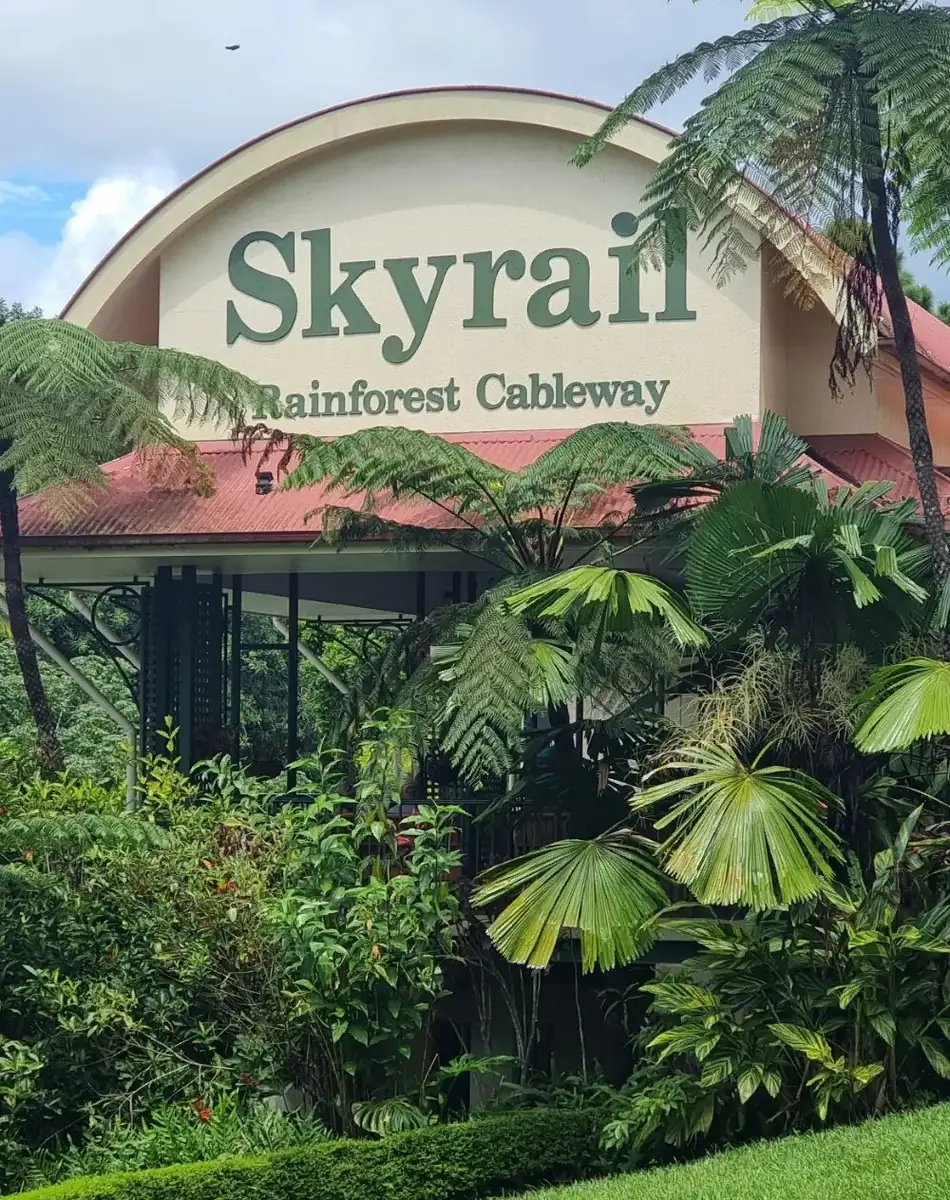
The trip to Kuranda is half the fun — and two of Australia’s most iconic journeys meet here: the Kuranda Scenic Railway and the Skyrail Rainforest Cableway.
Kuranda Scenic Railway
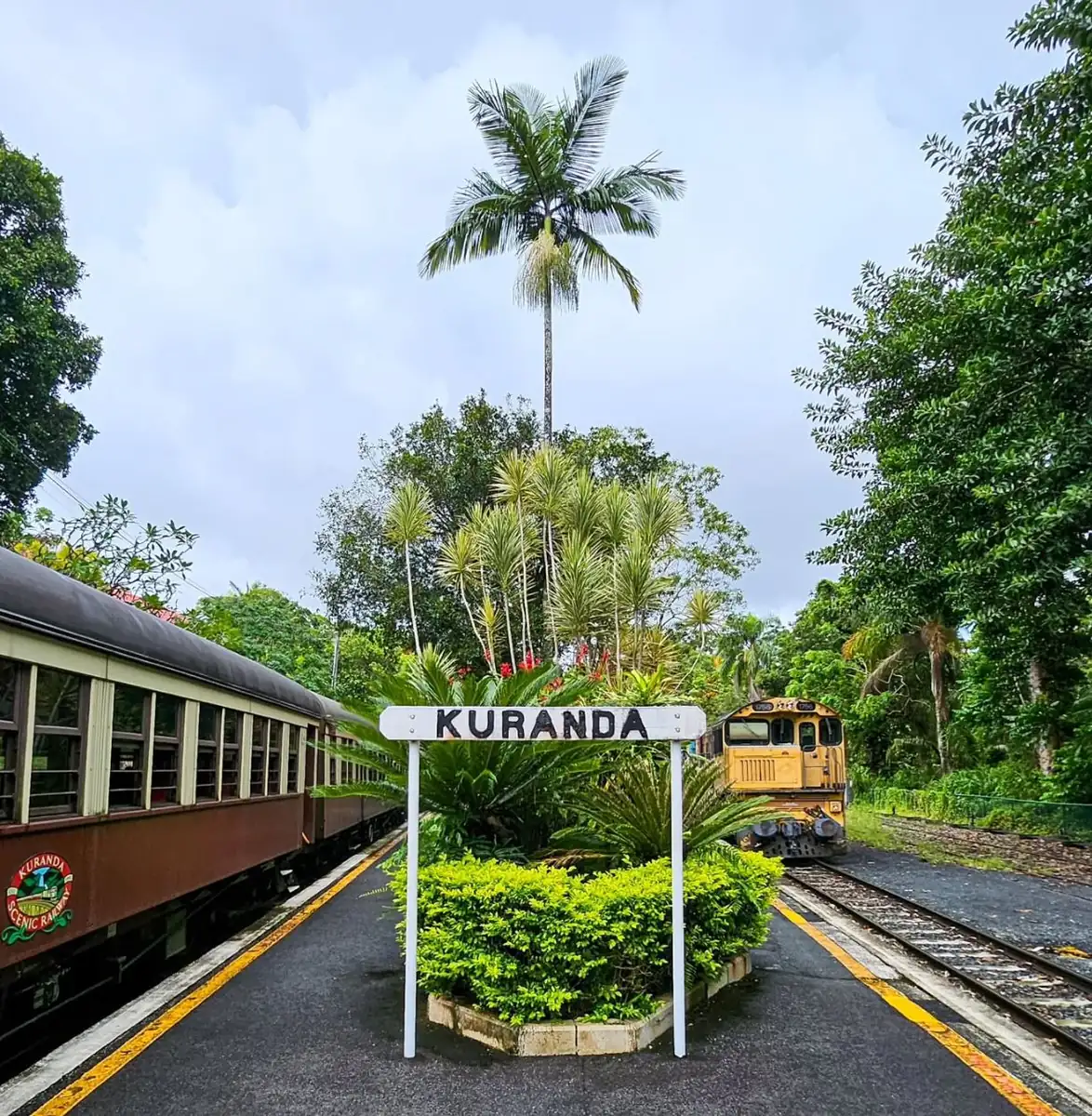
From Cairns Railway Station and Freshwater Station, this scenic train chugs its way up through Barron Gorge National Park, past waterfalls, hand-cut tunnels and timber bridges. Built in the 1890s, it’s a masterpiece of old-school engineering — 15 tunnels, 93 curves and panoramic views of Barron Falls that’ll have every camera clicking.
Skyrail Rainforest Cableway
Gliding above the World Heritage-listed tropical rainforest, the Skyrail is a whole new perspective. Spanning 7.5 kilometres from Smithfield Terminal to Kuranda, it hovers above the canopy, stopping at Red Peak Station and Barron Falls Station, where you can explore the Rainforest Discovery Zone and learn from interpretive displays designed by local marine biologists and ecologists.
Do yourself a favour and train up, Skyrail down — it’s the ultimate combo for a day in the rainforest.
Wildlife And Nature Experiences
Kuranda’s wildlife attractions bring the rainforest to life. From colourful wings to curious marsupials, this place is a showcase of Australian biodiversity.
Top Nature Experiences Around Kuranda:
- Australian Butterfly Sanctuary: Over 1,500 butterflies, including Ulysses and Cairns Birdwing.
- Kuranda Koala Gardens: Get up close to wallabies, freshwater crocs and yes — hold a koala (responsibly).
- Birdworld Kuranda: Free-flight aviary with lorikeets, galahs and macaws.
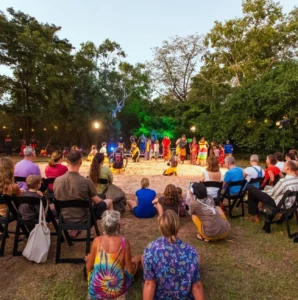
- Rainforestation Nature Park: Full-day adventure featuring Pamagirri Aboriginal Experience, Army Duck tours through the rainforest and native wildlife encounters in a natural setting.
All of these experiences are sustainable tourism — protecting what makes the Wet Tropics World Heritage rainforest special and helping visitors connect with it.
Dining And Relaxation
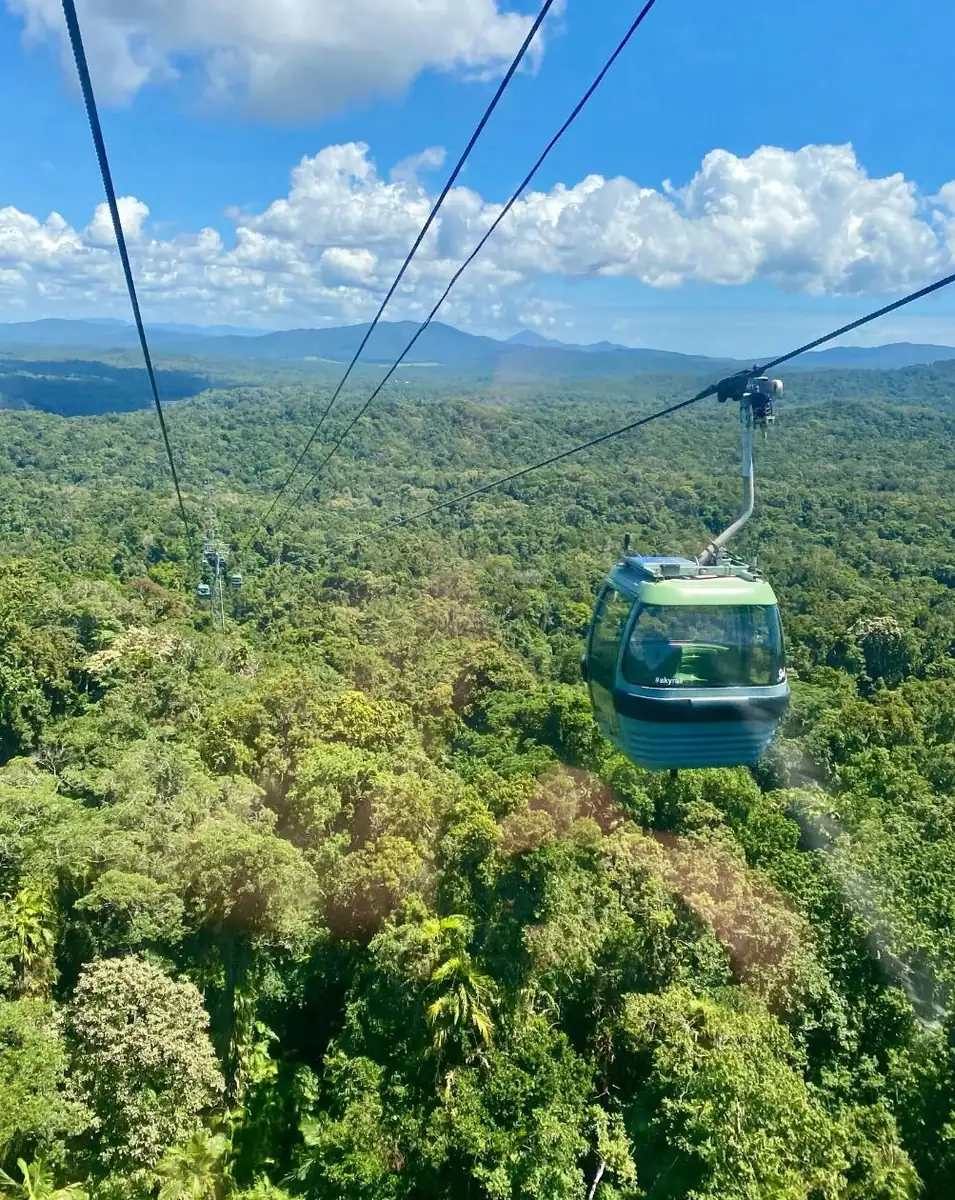
After the Skyrail Railforest Cableway or Scenic Rail, you’ll have worked up an appetite. Luckily, Kuranda Village knows how to feed hungry travellers.
Frogs Restaurant is my go-to for barramundi curry — fresh, local and under the rainforest canopy. If you prefer something lighter, Petit Café does delicious savoury crepes and Kuranda Rainforest Coffee roasts beans from local growers in the Atherton Tablelands.
For something slower, wander down to the Barron River for a picnic, or visit the Kuranda River Retreat for gourmet meals, yoga, and raw-vegan options. It’s relaxed, authentic and surrounded by green. Once you’ve had your fill of the forest, it’s the perfect time to book one of our Barrier reef tours to see the rest of the region’s icons.
Getting There: Your Tropical Travel Guide
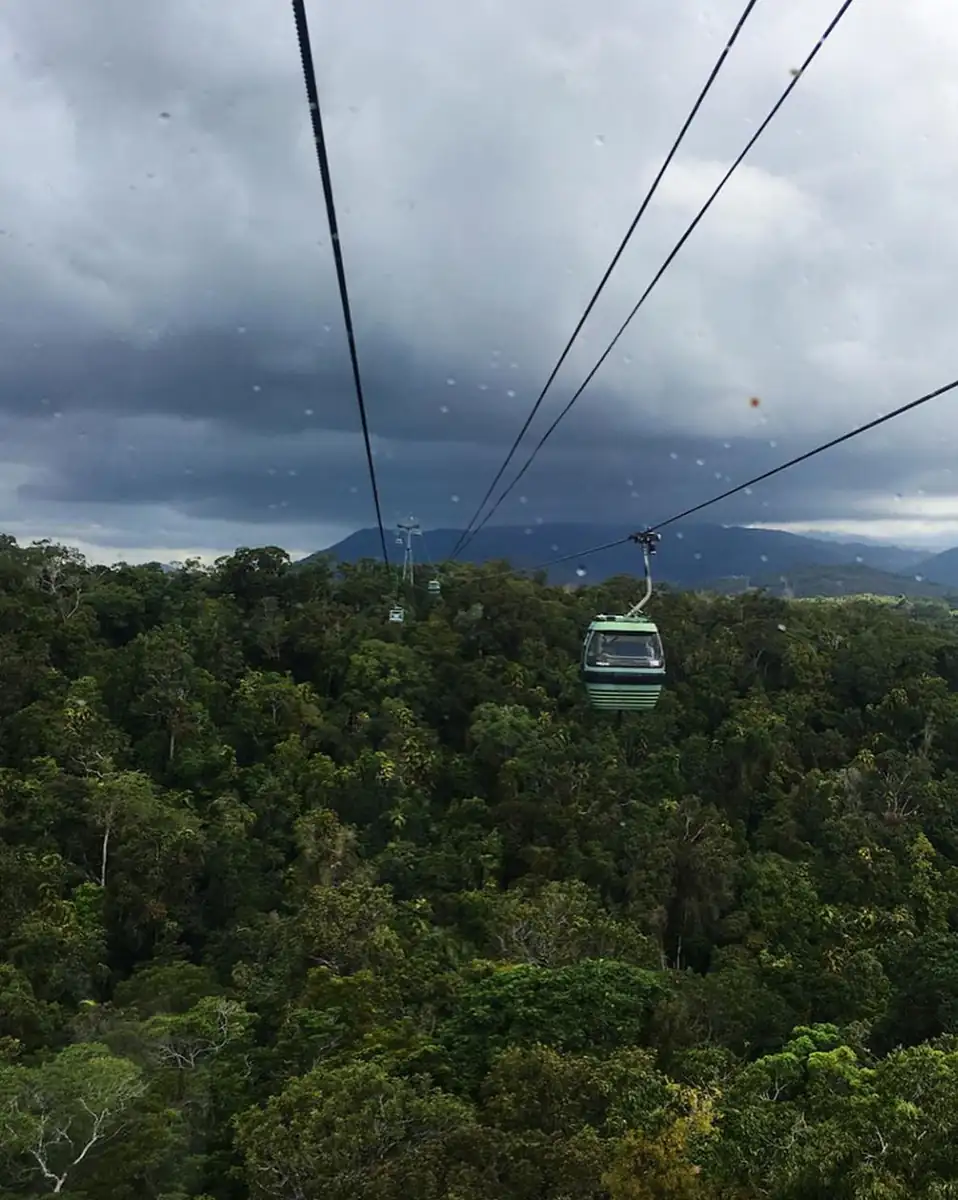
Getting to Kuranda is all about the journey.
Travel Options:
- Kuranda Scenic Train: Departs Cairns and Freshwater Station twice daily.
- Skyrail Rainforest Cableway: From Smithfield Terminal to Kuranda Station.
- Self-drive: 40 minutes from Cairns via the Kennedy Highway. It’s one of the most scenic highlights on our Australien East Coast Tour.
Good To Know:
- Book early in the dry season and school holidays.
- Bring mozzie repellent — rainforest life is real life.
- Expect showers, especially in the wet season.
Handy Travel Notes Before You Go
A few quick things to remember before you head into the rainforest:
- Best Time: May–October (dry) for clear skies and easy walks; November–April (wet) for full waterfalls and fewer people.
- Accommodation: Self-contained villas, camp sites or family and pet-friendly holiday homes like Honeybee House.
- Accessibility: Both Skyrail and Scenic Railway have mobility assistance (book ahead).
- Respect The Land: Kuranda is on Djabugay Country — follow the signs and stay on the tracks.
FAQ
How Long Should I Spend In Kuranda?
A full day is perfect — take the Kuranda Scenic Train up and back via the Skyrail Rainforest Cableway.
Can I Combine Kuranda With The Great Barrier Reef?
Yes. We offer various Australian East Coast tours that help you experience both the rainforest and the reef in a short timeframe.
What’s The Weather Like?
Tropical and unpredictable. Wet season humidity and cool mornings in the dry.
What’s The Must-See?
Barron Falls — especially after rain. Stop at the Barron Falls Lookout for the best view.
Is Kuranda Good For Families?
Yes! From Birdworld Kuranda to the Australian Butterfly Sanctuary, it’s family-friendly and educational.